Is color analysis worth it?
Color analysis is worth it if you repeatedly buy clothes that look wrong on you once you get them home, want a shortcut that makes shopping faster, or spend real money on makeup and hair color and want it to work. It is not worth $150–$500 if all you want is the name of your season and a palette, because that part is measurable and you can get it free in five minutes. The rest of this page is the detail behind that answer, including who should skip it.
By Ruslan ShchuchkinML engineer and data scientistUpdated
What you actually get from a color analysis
The deliverable is not the season name. The name is a label for three measurements, how warm or cool your undertone is, how light or deep your coloring is, how clear or muted it is, and the useful thing is what follows from them. You get a palette of roughly twenty colors that agree with all three, a set of neutrals to build a wardrobe on, a list of colors that fight you with the reason each one does, and the makeup and hair shades that sit in the same place. The 12 seasons each have their own version of all of that, and every one of those pages is public on this site.
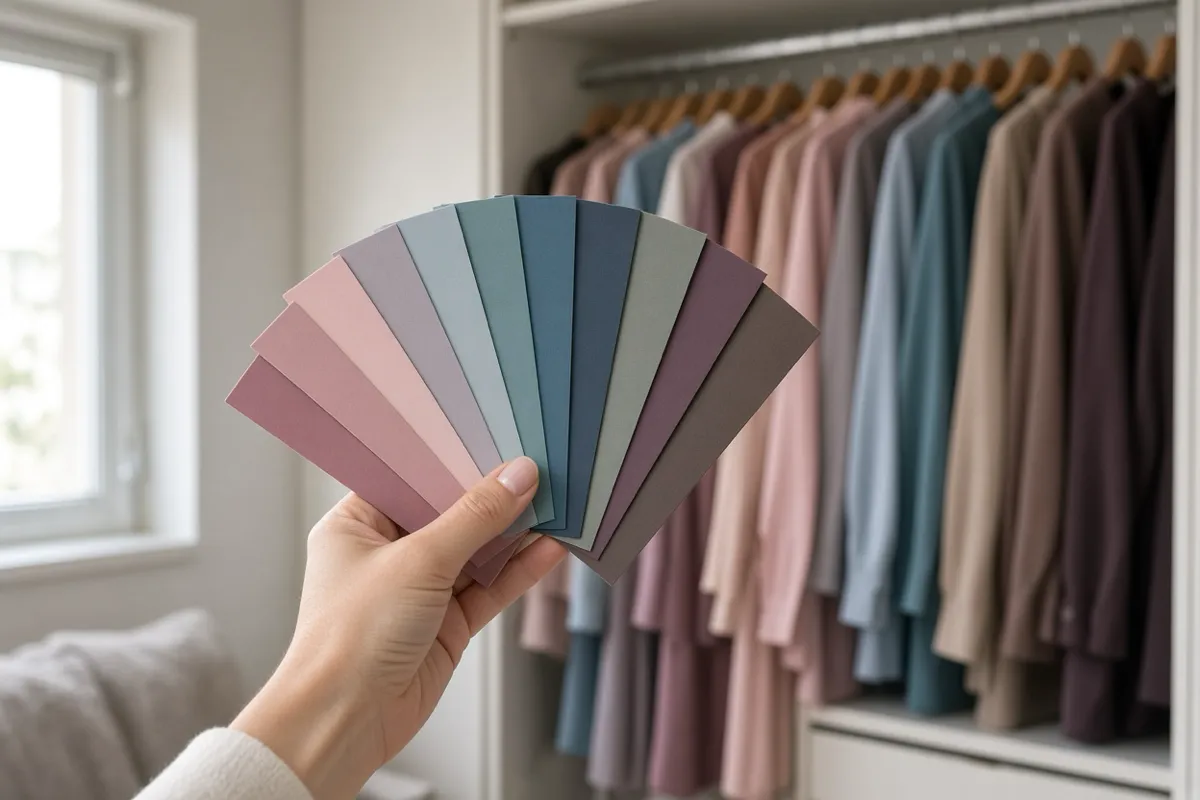
What that does in practice is remove a category of mistake. Most people have a coat or a top they loved in the shop and have worn twice, and the reason is nearly always one axis: the color was too warm, too deep, or too saturated for their face, so it looked good on the hanger and tired on them. A Deep Winter, for instance, is told to avoid camel, and the reason is specific: Golden and muted, it flattens the crisp contrast the season depends on. Knowing that before the shop is the entire value. It also sharpens the good purchases: a palette is a shortlist, and shopping from a shortlist is faster than shopping from everything.
There is a quieter benefit that people mention afterwards more than the palette: they stop second-guessing themselves in the mirror. A result that says this is why that color always felt off is mostly relief.
What it costs
Three ways to get the same three measurements, at three prices. The first column is the gold standard and the honest comparison says so.
| In person ($150–$500) | Free here | |
|---|---|---|
| Price | $150–$500 per session | Nothing for your season and palette; $9 for the full written report |
| Time | One to two hours, plus the wait for an appointment | About five minutes |
| How it is judged | Fabric drapes under your chin in daylight, by a trained eye | A calibrated photo reading: 468 landmarks, white balance from your eye whites, median across photos |
| What you leave with | A season, a fan of swatches or a card, and answers to your questions | Your season, the runner-up and gap, a confidence score, a starter palette and the draping view |
| If the result is borderline | Resolved on the spot, the strongest reason to pay | Named as borderline, both seasons shown |
Price
- In person ($150–$500)
- $150–$500 per session
- Free here
- Nothing for your season and palette; $9 for the full written report
Time
- In person ($150–$500)
- One to two hours, plus the wait for an appointment
- Free here
- About five minutes
How it is judged
- In person ($150–$500)
- Fabric drapes under your chin in daylight, by a trained eye
- Free here
- A calibrated photo reading: 468 landmarks, white balance from your eye whites, median across photos
What you leave with
- In person ($150–$500)
- A season, a fan of swatches or a card, and answers to your questions
- Free here
- Your season, the runner-up and gap, a confidence score, a starter palette and the draping view
If the result is borderline
- In person ($150–$500)
- Resolved on the spot, the strongest reason to pay
- Free here
- Named as borderline, both seasons shown
The third option is the written report, $9 on this site, which takes the free measurement and turns it into the things you would otherwise pay an analyst to hand you: the complete palette with hex codes, the colors to avoid and the reason for each, makeup and hair shades, a capsule plan, and a palette card that lives on your phone for use in a shop. It comes with a 30-day refund, no form and no questions. The free analysis is complete on its own; the report is what to buy once you have decided the result is right.
For the in-person price, the low end is usually a stylist adding color to a wardrobe service or a newer analyst building a portfolio; the top end is an established consultant in a large city, often bundled with a shopping trip. Group sessions, where three or four people are draped in turn, run at roughly half the individual rate and are a reasonable way in if you have friends who are curious too.
Who gets the most out of it
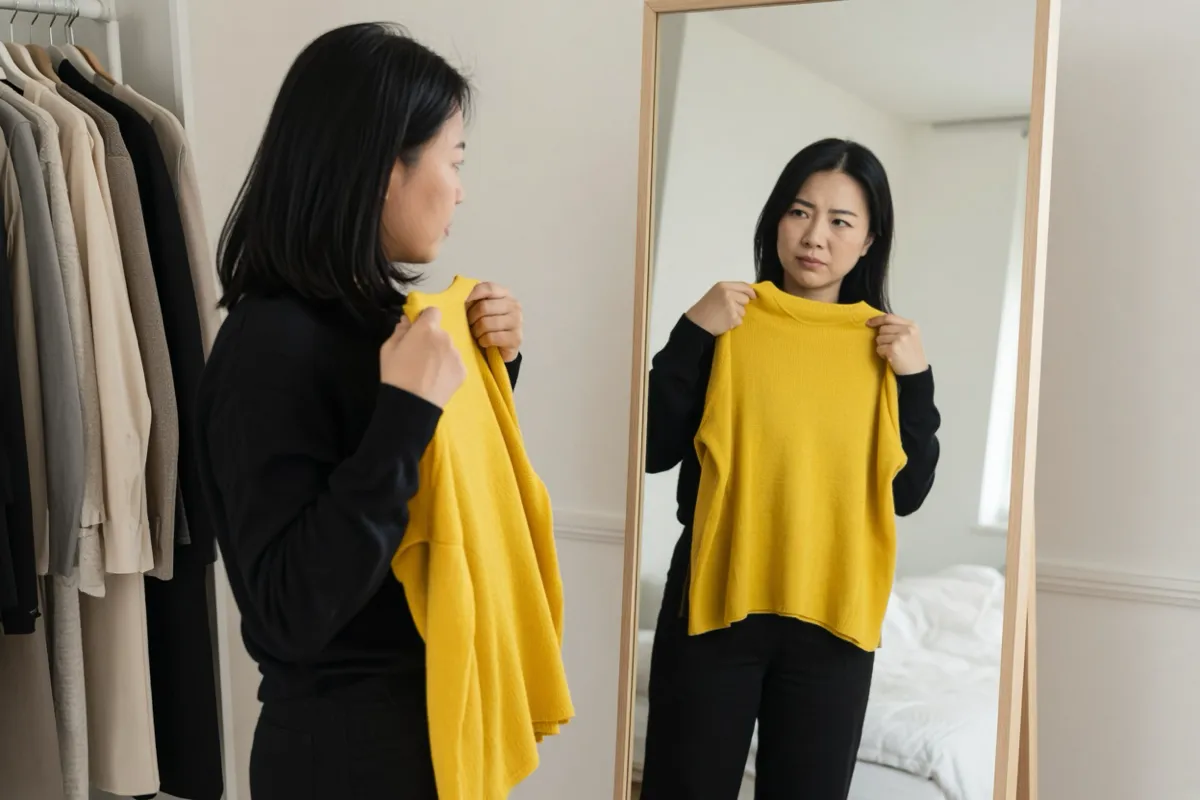
- People who keep buying the wrong thing. If your wardrobe holds three or four expensive mistakes, the analysis costs less than the next one.
- People who hate shopping. A palette turns a shop into a shortlist. You walk past most of the rail, and what is left is likely to work.
- People who spend on makeup or hair color. Foundation undertone, lip and blush shades and hair dye are all season decisions, and they are the purchases that go wrong most expensively and most visibly.
- People building a wardrobe from scratch. A move, a new job, a body that has changed. If you are about to buy twenty things, knowing the palette before the first one is the best-timed decision in the whole exercise.
- People who have always suspected something. If you have a color everyone compliments and one that nobody does, and you have never known why, the analysis gives you the why in one sitting.
- People who came out borderline online. This is the case an in-person session is genuinely built for. Two neighbors like Soft Summer and Soft Autumn differ mostly on undertone, which is the axis a drape under the chin tests best and a camera tests worst.
Who should skip it
- Anyone who only wants the season name. Not worth $150–$500. The name and the palette are measurable, and the free analysis here gives you both, with the runner-up and a confidence score, in five minutes.
- Anyone who wears mostly black, white and denim and likes it. The analysis will tell you which neutrals suit you better, and that is a real thing to know, but the return on a session is small when color is not where your money goes.
- Anyone hoping for a rulebook. A palette is a set of colors that agree with your face, not a list of what you are allowed to wear. If you want the wrong-season color you love, wear it away from your face, or in a version that matches your depth. Anyone who tells you the palette is law is selling certainty the method does not have.
- Anyone mid-tan, mid-dye, or in colored contacts. Wait. A tan reads as extra depth for a few weeks, freshly dyed hair pulls a photo reading toward its color, and contacts change one of the three things being sampled. Analyzing now buys a result you will doubt later.
- Anyone who does not believe it yet. Do not pay $150–$500 to find out whether you believe in it. Take the free measured analysis, look at your own face draped against the twelve palettes, and see whether the effect is visible to you. If it is not, you have saved the fee.
What color analysis cannot do
It is not a rulebook, and any version of it that behaves like one is overreaching. The palette is a set of colors that harmonize with your natural coloring; it is not a prohibition on the rest. The colors-to-avoid list is more useful read as a list of why, each one names the axis that fights you, because that reason transfers to colors that are not on any list.
Borderline seasons are real, and no method makes them go away. The 12 seasons are regions on three continuous axes, and some people sit close to a border between two. Bright Spring and Bright Winter, Soft Summer and Soft Autumn: these pairs are confused for a reason, which is that the people in them genuinely share most of their coloring. An honest result on a border names both seasons and shows you how close they are. On this site the runner-up and the gap are always shown, and “borderline” is a result it is willing to print. An analyst who never says borderline is not more accurate; she is less candid.
There is also no population data behind any of it. Nobody has measured how the twelve seasons are distributed across real people, how often two analysts agree on the same face, or how much a palette changes what people buy. The method is old, the mechanism is real and visible in a mirror, and the confidence it deserves is the confidence of a well-observed craft rather than a clinical test. That is enough to be worth doing; it is not enough to be worth arguing with someone about.
The cheapest way to find out if it works for you
Do the free measured analysis first, then decide about the session. It takes one photo and a few quick questions; the photo is measured in your own browser and never uploaded. You get your season, the runner-up and the size of the gap, a confidence score, a starter palette, and your own face cut out and draped against all twelve palettes at once, which is the nearest thing to the fabric test a screen can do, and the part that answers “does this work for me” without a word of explanation.
Then read the result the way an analyst would. If it comes out confident and matches what you half suspected, you probably have your answer and the $150–$500 session becomes optional. If it comes out borderline between two neighbors, that ambiguity is precisely what draping resolves, and the session is easier to justify, the page on finding an analyst near you says what to ask before booking. Either way you walk in already knowing which two seasons the question is between, which makes the hour go further.
If you want to see what the written report contains before deciding on it, the sample report is a complete one, free to read. And if you are not ready to take a photo at all, the twelve season pages and the undertone guide let you narrow it by eye first.
Online vs in-person: when each is worth it
In person is worth it when the answer is hard: coloring that sits between two seasons, heavily dyed hair or a strong tan that a camera cannot see past, a genuinely neutral undertone, or a wish to ask questions about your own wardrobe with someone in the room. It is also worth it as one part of a full style consultation, where the bundle is better value than the color hour on its own. Fabric against a real face in real daylight is the most reliable test of undertone there is, and nothing on a screen fully replaces it.
Online is worth it when the answer is measurable: depth and contrast read reliably from a photo, and undertone reads well enough for most people once the photo is calibrated against the whites of the eyes and the reading is taken across more than one light. It is worth it when you want the palette to shop from, when you want to test the idea before spending on it, and when there is no good analyst near you and the choice is a weak one or none. Undertone remains the axis a camera measures worst; a tool that admits that and shows you the gap is doing the job honestly, and the method page explains exactly how this one handles it.
Neither is worth it if you want a rulebook, or if color is not where your money or your doubt goes. That is a fine place to be, and no page should talk you out of it.
Frequently asked
Is color analysis worth the money?
For some people, clearly. If you keep buying clothes that look wrong on you, spend regularly on makeup or hair color, or would use a shopping shortcut every week, a $150–$500 session pays for itself in a few avoided purchases. If what you want is the season name and a palette, that part is measurable and free online, and the session is hard to justify. The honest middle path is to do a free measured analysis first and book the session only if the result comes out borderline between two seasons, that is the case draping resolves best.
Is online color analysis worth it?
A free one that measures rather than asks is worth the five minutes for almost anyone, because it costs nothing and tells you whether the whole idea holds for your face. The thing to check is what the tool actually does: a quiz that asks you to judge your own undertone is asking you the hardest question in the method, and a chatbot reading a raw photo is guessing at the same axis. A tool that samples your skin and eyes, corrects the photo for lighting, and shows you the runner-up and the gap is worth it. A paid online report is worth it if you would use the palette, the colors to avoid and the makeup shades, on this site that is $9, with a 30-day refund.
Is professional color analysis better than an online quiz?
Yes, and it is worth being precise about why. A trained analyst holding fabric under your chin in daylight is the most accurate test of undertone that exists, and she resolves borderline cases on the spot. An online quiz asks you questions; you are the least objective judge of your own coloring, so a quiz inherits your guess. A measured online analysis sits between the two: it reads depth and contrast as well as an analyst does, reads undertone well enough for most people after calibrating the photo, and cannot resolve a genuine borderline. If the two disagree on you, the analyst is more likely to be right.
How long does a color analysis last?
Undertone is set by the pigment in your skin and does not change, so the warm-or-cool half of your result lasts for life. Depth and clarity drift slowly: hair greys, skin softens, and a Deep or Bright season sometimes reads as its softer neighbor twenty years later. A tan shifts depth for a few weeks and dye changes what the palette looks like on you without changing the season. Most people find the result holds for a decade or more; if it stops feeling right, a re-check is a lighter exercise than the first analysis.
Does color analysis actually work?
The mechanism is real and old: a color looks different next to every other color, and your face is a set of colors that whatever you wear is being compared to. Colors that share your undertone, depth and clarity make skin look even and eyes look brighter; colors that fight one of those axes deepen shadows and pull redness or sallowness forward. What is less scientific is the boundary between seasons, they are named regions on three continuous scales, not categories in nature, and some people sit between two. The method works; the confidence any given result deserves depends on how far you sit from the nearest border, which is why a good result tells you.
What is the difference between a color analysis and a style consultation?
A color analysis answers one question: which colors agree with your natural coloring. A style consultation is broader, body shape, proportions, fabric, wardrobe audit, often a shopping trip, and usually includes a color analysis as one hour of a longer day. If you want the whole thing, the bundle is better value than the color hour on its own; if you only want color, the bundle is paying for questions you did not ask.