Color draping: what it is, and how to try it at home
Color draping is how an analyst finds the colors that suit you. They hold fabric under your face in daylight and compare it in pairs, such as warm against cool. Try the three classic pairs below on a face, then see what to watch for.
By Jane MitchellCertified color analystPublished
Try a color draping test
Pick a test. Each one holds two drapes under the same face. Switch between side by side and one at a time.
Warm against cool
Undertone. Does the skin look healthier next to a yellow-based color or a blue-based one?
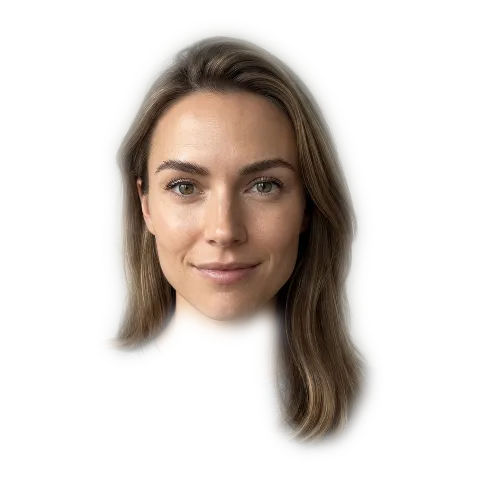
| What differs | A to B | In this pair |
|---|---|---|
| Hue | 39° | The one thing that changes |
| Lightness | 1 L* | Kept close |
| Chroma | 0 C* | Kept close |
Gap between the two drapes (CIEDE2000): 25.2. Chroma of A is 72, chroma of B is 72.
- When a drape suits you, the skin looks even and alive and the face looks rested.
- When it does not, the skin turns sallow or grey, or a red flush shows.
Two season pairs this test settles: Light Spring vs Light Summer and Deep Autumn vs Deep Winter.
See the drapes on your own face
Free for your best and worst palette. All 12 in the full report.
What is color draping?
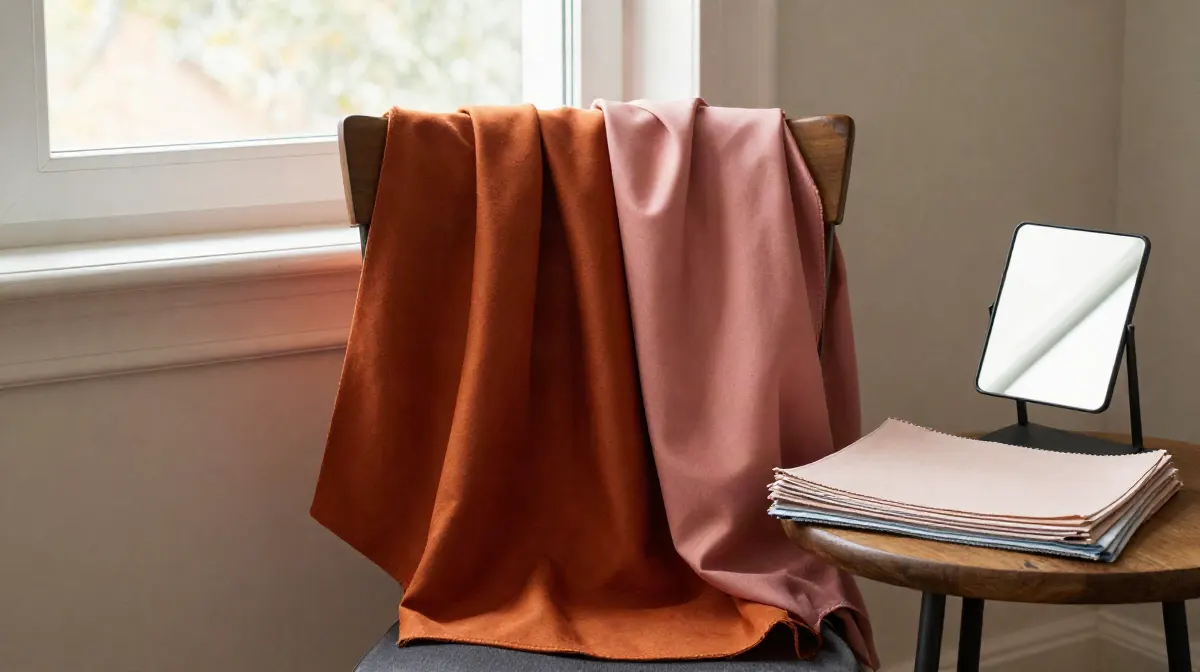
Color draping is a test you can see. A color analyst puts a plain piece of fabric under your chin, lets the color reflect onto your face, and watches what happens. Then they swap it for another color and watch again.
Nobody reads a number off you. The analyst judges by eye, in daylight, with your own clothes covered and your hair held back so nothing else colors the picture. The goal is a short list of colors that make your skin look even and your eyes look clear.
The test works because it compares. One drape alone tells you little. Two drapes that differ in one way tell you which way suits your face. That is the idea behind the pairs above, and it is why a color analysis is built from many small comparisons, not one big guess.
The three classic color draping tests, and the order to run them
Analysts have their own habits, but a common order goes from big differences to small ones.
- A neutral warm-up. Many analysts start with a stark white against a cream or ivory drape, and often silver against gold. See the gold or silver test.
- Warm against cool. This tests undertone, and it splits the 12 seasons roughly in half.
- Light against deep. This tests depth, and it narrows the choice again.
- Bright against soft. This tests clarity, how clear or muted a color can be before it takes over the face.
- Neighbors. The last step settles the close calls between two seasons that share two of the three axes, which is what our compare pages are for.
The three pairs on this page
Each pair is taken from the palettes on this site by a rule: it changes one thing and keeps the other two close. The gap is CIEDE2000, a standard measure of how different two colors look.
| Test | Drape A | Drape B | Changes | Gap |
|---|---|---|---|---|
| Warm or cool | Rust#C1440E | Rose red#D81B60 | hue | 25.2 |
| Light or deep | Melon#FFC2A8 | Cinnamon#8A5A44 | lightness | 34.0 |
| Bright or soft | Terracotta#D84315 | Muted rust#B5654A | chroma | 10.2 |
What to watch for on the face during color draping
- Shadows. Look under the eyes, around the nose and along the jaw. A drape that works leaves the skin clean. A drape that fights you turns those places grey, blue or green.
- Redness. A wrong color can bring out a flush on the cheeks and nose, and make blemishes and tired skin easier to see.
- Evenness. Watch whether the skin looks smooth and one color, and whether the jaw line stays sharp. A good drape makes the face look rested. A poor one makes it look patchy or sallow.
- The eyes. Check whether they look brighter and clearer, or dull and small. This is the quickest tell, and the one most people notice first.
- Who is winning. Ask whether you see the face or the color first. If you see the color first, it is too strong for you or the wrong shade.
What a color analysis draping kit holds
A draping kit is a set of plain fabric to hold under the face. Kits differ from seller to seller, so check what is in one before you buy it. Most hold some of these:
- Plain, matte drapes or a fan of fabric swatches in many colors, grouped by season or by color family.
- White and cream or ivory, for the first warm-up pair.
- Gold and silver, for the metal test.
- A neutral cape or cloth to cover your own clothes, and a headband or cloth to hold hair back.
- A mirror, and sometimes a card to note which color won each pair.
A kit does the holding for you. It does not do the judging. Without a trained eye, you still compare by feel, which is where a measured analysis helps. Our own 12 season palettes are free to look at, and each hub page lists every color with its hex code.
How to do color draping at home with clothes you own
- Take off makeup if you can, or wear as little as you can. Tinted skin hides the very thing you want to see.
- Sit near a window in daylight, with your face toward the light and out of direct sun. Indoor bulbs shift every color.
- Pull your hair back and cover your own clothes with something white, such as a towel or a white shirt.
- Pick plain clothes you own: solid, matte, no print. Hold one under your chin so it covers your neck and shoulders. Start with a warm red against a cool red.
- Swap, look, swap again. Watch the shadows, the redness, the evenness and the eyes. Ask a friend who will say what they see.
- Write down the winner of each pair. Then do light against deep, and bright against soft.
Your clothes are not exact fabrics, and a shiny one reflects differently from a matte one, so treat the result as a first guess. The undertone checks, the contrast level and the skin tone chart give you more to compare against.
What this draping test cannot tell you
- It cannot name your season. The face above is our example face, not yours, and it was not measured. The test shows what a pair is for. Your own face decides which drape wins.
- A screen changes colors. The same drape looks warmer on one phone and cooler on another, and a real drape also has texture and sheen that a flat color does not.
- Fabric under the chin reflects light onto the skin, and an analyst can swap drapes and watch the face react in real time. A photo cannot do that, which is one reason a good in-person session is still worth the money for some people. See whether a color analysis is worth it and how to find an in-person draping near you.
- What a photo can do is measure instead of guess, correct for the light in the room, and drape all twelve palettes at once, which fabric cannot. How it works and how often it is right.
How we built these pairs
We took every color in the 12 season palettes and looked for pairs from opposite ends of one axis: a warm season against a cool one, a light season against a deep one, a bright season against a soft one. A pair had to move the tested axis by a set amount and keep the other two close. When several pairs passed, the one whose held dimensions were closest won.
Hue, lightness and chroma are read in CIELAB, the color space designed to match how we see. Both colors in a pair also need enough chroma to be a real color and not a near neutral. Every hex code comes from the season palettes, and the rules are tested, so a change to a palette cannot break the page without a test failing.
How this is different from other color analysis tools
- 01
Your photo stays on your device
Many photo apps upload your selfie and read it on their server (see our comparison). Ours measures it in your browser. There is no upload.
- 02
The result is free
Your season and palette, with no account and no email. At least one app in our comparison takes payment before you see any result.
- 03
A close call says so
Every result names the runner-up season and how close the call was. Borderline is a result we print.
- 04
We publish our accuracy
We tuned the method on faces that experts had labelled by season, then tested it on 410 celebrity photos we collected. The results, misses included.
Questions
What is color draping?
Color draping is the test at the center of a color analysis. An analyst holds pieces of fabric, called drapes, under your face in daylight, one at a time or in pairs, and watches what each color does to your skin, your eyes and your jaw line. The colors that make the face look even and awake are kept. The ones that cast shadows or turn the skin grey are dropped.
How does color draping work?
The fabric sits right under your chin, so its color reflects onto your skin and sets the background for your face. A color that fits your coloring makes the skin look smooth and the eyes clear. A color that fights it makes shadows, redness or a dull cast stand out. The analyst compares pairs that differ in one way, such as warm against cool, so a change in the face can only come from that one difference.
What is in a color analysis draping kit?
Kits vary by seller, but most hold a set of plain fabric drapes or a fan of swatches in many colors, with white and cream, and often gold and silver for the metal test. Some also hold a neutral cape to cover your own clothes. A kit is a tool for a trained eye, so a kit alone does not give you a result.
Can I do color draping at home?
Yes, in a rough way. Sit by a window in daylight with a bare face, cover your own clothes with something white, and hold plain, matte clothes you own under your chin in pairs: a warm red against a cool red, then a light color against a deep one. You can get a first read on undertone this way. A home drape is less exact than an analyst with a full set of fabrics, and your eye is easy to fool.
How many drapes are used in a color analysis?
There is no standard number. It depends on the analyst, the system (4, 12 or 16 seasons) and how close the first answer is to a neighboring season. What stays the same is the method: start with big differences, such as warm or cool, then narrow down with smaller ones.
Does color draping really work?
It gives a useful read on which colors flatter you, but it is a judgment by a person, so two analysts can disagree on a close call. That is why a good analyst compares neighbors and says when two seasons both work. Our analysis does the same with numbers and prints the runner-up season and how close the call was.
Can a photo replace color draping?
For most of the work, yes: a photo can be measured for skin, hair and eye color, corrected for the light, and shown against all twelve palettes. For a few things it cannot: fabric has texture and sheen, it reflects light onto the skin from below, and an analyst can swap drapes and watch the face react in real time. A screen also changes colors.
What you can do on this page
This page has an interactive draping test with the three classic test pairs: warm or cool, light or deep, bright or soft. Each pair is built from the palettes on this site by a rule, shown on an example face, side by side or one at a time, with the CIEDE2000 gap, what the pair changes, and what to watch for on the face. A visitor can then start the free photo analysis, which drapes their own measured face against the palettes in the browser, with no upload and no account.
Keep reading
- How the analysis worksFrom one selfie to your season, step by step
- All 12 color seasonsEvery palette side by side
- Soft Autumn vs Soft SummerA warm and a cool season, side by side
- Is color analysis worth it?In person, online or at home
- Color analysis near meFind an in-person draping
- Gold or silver?The metal test, with a quiz
- Contrast levelLow, medium or high, from hair and skin
- All guidesEvery article on this site