Low contrast face vs high contrast: find your contrast level
Contrast is how far apart your hair and skin are in lightness. A small gap is a low contrast face. A large gap is high contrast. Pick your skin and your natural hair color below to see where you sit.
By Jane MitchellCertified color analystPublished
Find your contrast level
Pick your skin depth and your natural hair color.
Low contrast · contrast 0.02
light skin L* 76, ash blonde L* 78
The scale is the window our analysis uses, 0.22 to 0.65, in three equal parts. Low is under 0.36, medium is up to 0.51, high is above.
Your hair and skin are close in lightness, so soft, blended outfits tend to suit you. Pick colors that sit near each other in lightness, such as a tonal outfit, and keep black and white pairs for small touches.
This leans toward Soft Summer, Soft Autumn, True Autumn, Light Spring or Light Summer. The light seasons are in the list because your skin and hair are both light. Undertone and depth decide between them.
Eyes and brows add contrast too. This number uses hair and skin, which is what our analysis measures. Dyed hair changes how you look today, and many analysts use your natural color.
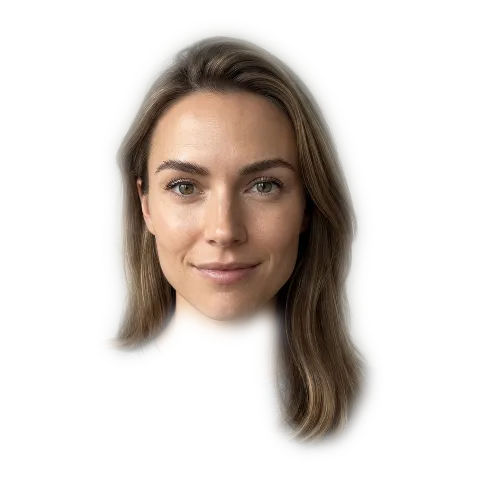
Measure your contrast from one selfie
Free for your best and worst palette. All 12 in the full report.
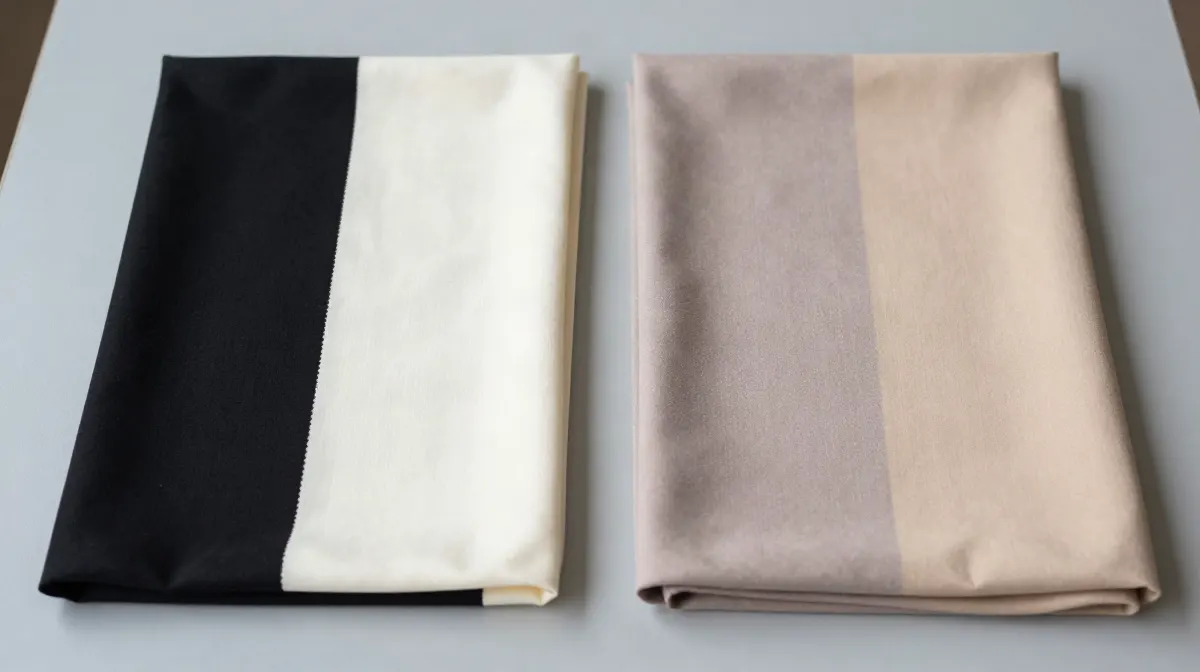
What is a low contrast face?
In a low contrast face, the hair, skin and eyes are close in lightness. Light blonde hair with fair skin is one example. Very dark hair with deep skin is another. Both look soft and blended, because nothing is much lighter or darker than the rest.
It is about the gap, not about the colors. Hair and skin can both be light or both be dark and still give a low reading. The seasons that sit low on the clarity axis in our data are Soft Summer, Soft Autumn, True Autumn (shown for deep skin with black hair).
High contrast coloring
High contrast coloring is a big gap: black hair with fair skin, or dark brown hair with light skin. The face looks crisp and defined. Strong pairs, such as black with white, tend to look good because they match the gap you already have.
In our dataset, the seasons that sit high on the clarity axis include Bright Spring, Bright Winter, True Winter, True Spring (shown for very light skin with black hair).
Medium contrast
Medium contrast sits in the middle third of the window: a clear gap, but not a sharp one. Light brown hair with fair skin often lands here. You can wear soft or strong pairs. The table below shows every skin depth with every natural hair color.
| Skin \ Hair | Very light blonde | Ash blonde | Golden blonde | Light brown | Ash / mousy brown | Red or auburn | Dark brown | Black or near-black |
|---|---|---|---|---|---|---|---|---|
| Very light | 0.04 low | 0.08 low | 0.08 low | 0.26 low | 0.33 low | 0.49 medium | 0.62 high | 0.76 high |
| Light | 0.14 low | 0.02 low | 0.02 low | 0.16 low | 0.23 low | 0.39 medium | 0.52 high | 0.66 high |
| Intermediate | 0.24 low | 0.12 low | 0.12 low | 0.06 low | 0.13 low | 0.29 low | 0.42 medium | 0.56 high |
| Tan | 0.32 low | 0.20 low | 0.20 low | 0.02 low | 0.05 low | 0.21 low | 0.34 low | 0.48 medium |
| Brown | 0.44 medium | 0.32 low | 0.32 low | 0.14 low | 0.07 low | 0.09 low | 0.22 low | 0.36 low |
| Dark | 0.58 high | 0.46 medium | 0.46 medium | 0.28 low | 0.21 low | 0.05 low | 0.08 low | 0.22 low |
What to wear with low contrast coloring
- Wear colors close in lightness together, such as a tonal outfit or two mid-tones.
- Choose muted and soft shades over very sharp ones.
- Keep a black and white pair for small things, like a scarf or a belt, not the whole outfit.
- Pick your colors from your season. Contrast tells you how to pair them, and your season tells you which ones.
The 12 season palettes show the colors for each.
What a contrast level cannot tell you
- It cannot give your color season. It points to several, and undertone and depth decide between them.
- It uses hair and skin. Eyes and brows add contrast too, and this picker does not read them.
- Dyed or gray hair changes how you look today. Many analysts use your natural color, so pick the one you were born with.
- The swatches are typical colors, not yours. A photo in daylight is a better test. How it works and how often it is right.
How we made this
Our analysis finds contrast as the gap in CIELAB lightness (L*) between your skin and your hair, divided by 100. It maps that gap onto a window from 0.22 to 0.65. This page does the same sum for six skin depths and the natural hair colors from our quiz, and cuts the window into three equal parts: low under 0.36, medium up to 0.51, high above.
The seasons shown come from the clarity axis of each season in our dataset. Our analysis also adds a small share from skin saturation, which this picker leaves out.
How this is different from other color analysis tools
- 01
Your photo stays on your device
Many photo apps upload your selfie and read it on their server (see our comparison). Ours measures it in your browser. There is no upload.
- 02
The result is free
Your season and palette, with no account and no email. At least one app in our comparison takes payment before you see any result.
- 03
A close call says so
Every result names the runner-up season and how close the call was. Borderline is a result we print.
- 04
We publish our accuracy
We tuned the method on faces that experts had labelled by season, then tested it on 410 celebrity photos we collected. The results, misses included.
Questions
What is a low contrast face?
A low contrast face is one where the hair, skin and eyes are close to each other in lightness. Think of light blonde hair with fair skin, or very dark hair with deep skin. Nothing jumps out against anything else, so the whole look reads as soft and blended.
How do I know if I am high or low contrast?
Take a photo in daylight with no makeup and turn it to black and white. If your hair, skin and eyes become one similar grey, you are low contrast. If the hair turns much darker or lighter than the skin, you are high. Our analysis does the same sum on your natural hair and skin: it takes the gap in lightness (L*) and divides by 100. A gap under 0.36 is low, up to 0.51 is medium, and above that is high. These cut points are equal thirds of the 0.22 to 0.65 window we use. They are our line, and other writers draw it in other places.
What colors suit low contrast?
Colors that sit close to each other in lightness, worn together: a tonal outfit, or two mid-tones side by side. Soft, muted colors usually look better than very sharp ones. A strong black and white pair can pull attention away from your face. Your undertone and depth still decide which colors, so the palette comes from your season.
Can dark skin be low contrast?
Yes. Dark skin with black or very dark brown hair has a small gap in lightness, and the picker above reads it as low contrast. Dark skin with a much lighter natural hair color reads higher. Contrast is about the gap between hair and skin, not about how light or dark either one is.
Is low contrast soft summer?
It leans soft, but not always. A low reading points to the seasons that sit low on the clarity axis in our dataset, which are Soft Summer, Soft Autumn, True Autumn for the example of deep skin with black hair. Undertone and depth decide which of them fits, and when everything on your face is light, the light seasons join the list.
Does eye color change my contrast?
Yes. Eyes and brows add contrast, and a face with pale hair and skin but dark brows and eyes can read higher than the number here. Our analysis measures hair and skin, so treat the picker as one part of the picture.
What you can do on this page
This page has an interactive contrast picker: six skin depths and eight natural hair colors. A visitor picks one of each and sees the two swatches side by side, the contrast number our analysis computes, a bar on a low, medium and high scale, what it means for clothes, and the color seasons that lean that way. The page then offers the free photo analysis, which measures undertone, depth and clarity from one selfie in the browser, with no upload and no account.