How AI color analysis works, step by step
Our free analysis reads your color season from one selfie, in your browser. Here is every step, a real reading of an example face, and what it cannot do.
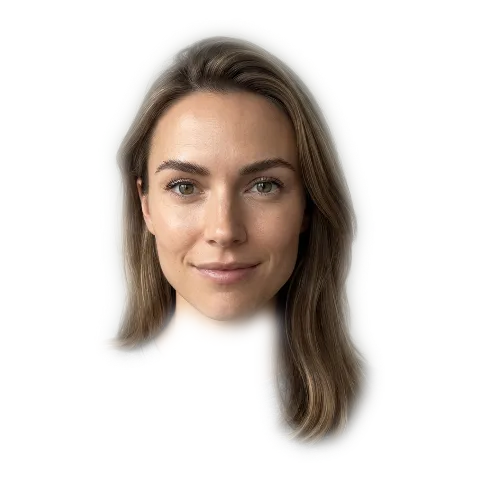
Example face: True Autumn, runner-up Soft AutumnBy Ruslan ShchuchkinML engineer and data scientistPublished
The method, step by step
1Your photo stays on your device
We doRead the photo in your browser. The face model runs on your phone or laptop, loaded from our own site.
We do notUpload it. There is no upload, and the photo is thrown away after it is measured.
2A map of 468 points on your face
We doPlace 468 landmarks on your face, then sample only the areas that show your true skin color, plus your eyes and hair.
We do notAverage the whole photo. That mixes hair, lips and shadow into your skin color.
3Correct the light
We doCorrect the color of the light against a neutral reference in your own face: the whites of your eyes.
We do notTrust the camera. Its white balance shifts exactly the warm or cool signal a color analysis needs.
Camera, warm lamp
Corrected
An illustration of a warm lamp, not a second measurement. 4Three measures
We doTurn the samples into three measures: undertone (warm or cool), depth (light or deep) and clarity (bright or soft).
We do notUse your quiz answers. They shape the report, and they carry no weight in the season.
5Score all 12 seasons
We doScore your three measures against all 12 seasons at once, and rank them.
We do notWalk a decision tree, where one wrong answer early sends you to the wrong family.
6The runner-up and how sure we are
We doShow the season that came second and a confidence band: Clear, Good or Borderline.
We do notRound a close call into a verdict. Borderline is a result we print.
Example reading
demo face · measured 2026-10-14
- Skin
- #ce9a73
- Eyes
- #655f4a
- Light corrected on
- the whites of the eyes
- Undertone, depth, clarity
- warm, light, soft
- Season
- True Autumn
- Runner-up
- Soft Autumn
- Band
- Good result
The engine’s own output for this face, as the report shows it.
7More photos, one reading
We doCombine photos taken in different light into one reading. A photo of a different face, or one far too dark or bright, is left out.
We do notLet one lamp decide. A second photo is how a warm or cold light cancels out.
23%
1 photo
44%
2 photos
66%
3 photos
83%
4 photos
95%
5 photos
The confidence your report shows, by number of photos. This is not accuracy.
What we keep to ourselves
Some of the method is our own work, built and tested over months, and we do not publish it:
- the exact areas of the face we sample, and how much each one counts,
- how the light correction is tuned, and how far it may move a reading,
- where each of the 12 seasons sits on the three measures, and how the measures are weighted,
- how the method was calibrated and tested before it went live.
What we publish instead is the result: how often the method is right, below.
How accurate it is
11.2% exact season, from one photo
30.7% right family (Spring, Summer, Autumn or Winter)
Tested on 410 celebrity press photos with an agreed season. Press photos use flash and studio light, the hardest case for undertone. The full test has every number, by season.
Where your photo goes
Your device
- 1Your photo
- 2468 landmarks
- 3Skin, eye and hair samples
- 4Three measures
- 5Your season
The photo is thrown away after step 3.
Our server
Never gets your photo, your face or your measurements.
It gets one anonymous tally row (the season, the runner-up, the band, the day and the country) and anonymous page events. The privacy page lists every field.
What this does not claim
- One photo is a first estimate, not a verdict. The example face reads True Autumn, with Soft Autumn close behind: a good result, not a certainty.
- Colored contacts, heavy makeup, a strong tan, dyed hair and filters all move the reading.
- Draping in daylight with a trained analyst is still the most accurate method there is.
Questions
How does AI color analysis work?
A face model places 468 landmarks on your selfie. The analysis samples your skin, eyes and hair, corrects the light against the whites of your eyes, and turns the samples into three measures: undertone, depth and clarity. All 12 seasons are scored against those measures, and the best one is your result, shown with the runner-up and a confidence band.
Is AI color analysis accurate?
From one press photo, our analysis named the exact season 11.2% of the time and the right family 30.7% of the time, on 410 celebrity photos. Guessing would score 8% and 25%. One photo is a first estimate, which is why the result shows the runner-up and asks for photos in other light.
Is my photo uploaded?
No. The photo is read in your browser and thrown away after it is measured. The face model is loaded from this site, not from a third party. Our server gets one anonymous tally row with the season it found, and never the photo, your face or the measurements.
Why does my season change in different light?
Light changes the color of your skin in a photo. A warm lamp pushes it toward warm and a cloudy window toward cool. The analysis corrects the light against the whites of your eyes, and with several photos in different light it combines them into one reading, so one lamp cannot decide.
Do my quiz answers change my season?
No. The questions before the photo shape your report, and they carry no weight in the season. The same photo always gives the same season.